
Keary “Danny” Hayes II
Senior Advisor
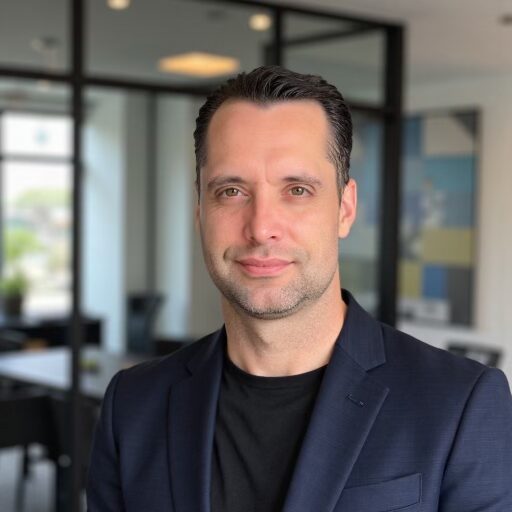
Keary “Danny” Hayes II, known professionally as Danny Hayes II, is a Senior Advisor at 33 Agency and an entrepreneur and strategic advisor with more than two decades of experience spanning commercial banking, international capital markets, infrastructure development, emerging technologies, and public-private partnerships.
Hayes is federally registered under the U.S. Lobbying Disclosure Act (LDA). His government affairs experience encompasses legislative advocacy, federal policy engagement, and strategic coordination involving technology, critical infrastructure, energy, international business, and economic development. His work bridges private-sector commercial priorities with the institutional and regulatory considerations shaping federal infrastructure and modernization initiatives.
Earlier in his career, Hayes led substantial pre-development activities for renewable-powered digital infrastructure initiatives. His experience includes commissioning engineering and architectural master plans, structuring real estate and commercial arrangements, coordinating technical development teams, and negotiating agreements involving energy-storage integration, construction services, and prospective data-center tenancy. These initiatives required coordination across infrastructure engineering, institutional finance, technology, and project-development disciplines.
His financial background includes commercial banking, private capital markets, structured finance, and international business development, including roles with Mid Atlantic Capital and the DP Invest business of Derivative Partners Holding AG in Zurich, Switzerland. He has also served in advisory capacities involving Ambri, an advanced energy-storage technology company, Hudson Capital Advisors, and Unify Platform AG.
Hayes’s institutional appointments include service on the advisory board of the University of California, Riverside Extension Design Thinking Executive Program and membership in the National Small Business Association (NSBA) Leadership Council, which he joined in 2024. In June 2020, he was appointed Director Emeritus of Green Cross CAMECA, following unanimous approval by the organization’s Central America, Mexico, and Caribbean regional board of directors.
His government-affairs experience includes private-sector federal lobbying and legislative advocacy involving infrastructure, international business, technology, energy, and economic development.
Across his career, Hayes has worked with financial institutions, engineering and technology organizations, commercial counterparties, and public-policy stakeholders in North America, Europe, and Asia. His advisory approach focuses on connecting strategic objectives with capital requirements, contractual frameworks, institutional governance, and practical execution.
Research & Publications
Keary “Danny” Hayes II has authored research and professional papers examining artificial intelligence governance, infrastructure development, capital readiness, public-private partnerships, and institutional risk management.
His publications explore the commercial, operational, and governance requirements involved in advancing complex technology and infrastructure initiatives.
Governed AI in Public-Private Infrastructure
As public infrastructure operators adopt enterprise AI, traditional PPP governance must expand beyond construction, financing, and service-level performance to include model risk, data provenance, cybersecurity, human authority, auditability, and change control.
Institutional Due Diligence and Counterparty Verification in Cross-Border PPPs
Cross-border public-private partnerships frequently depend on sponsors, landowners, operators, financiers, advisors, technology vendors, and public authorities whose rights and responsibilities are not interchangeable. This paper develops a DRT-based due-diligence architecture for verifying counterparties before institutional commitments are made.
Risk Allocation and Capital Readiness in Public-Private Partnerships
Public-private partnerships do not eliminate infrastructure risk; they assign, price, monitor, and govern it. Poorly structured projects often place risk with a party that lacks the authority, capability, economic incentive, or balance sheet capacity to manage it.